
100 Days Later: What I’ve Learned Since Retiring as Police Chief
100 Days Later: What I’ve Learned Since Retiring as Police Chief
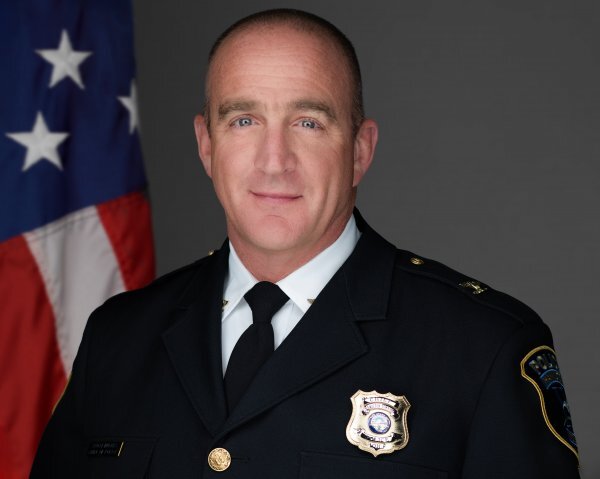
By: Chief Scott Hughes (ret.)
On May 8, I walked out of the police department for the last time as chief of police. After nearly 30 years in law enforcement, including the last decade as police chief, I knew retirement would be an adjustment. I didn't know exactly what that adjustment would feel like.
Now, a little more than 100 days later, I'm starting to figure some of it out.
Probably the biggest thing I've noticed is how much better I feel. I don't mean that as some indictment of the job, because I loved being a police chief and I'm incredibly grateful for the career I had. But I don't think I realized how much stress I was carrying until I wasn't carrying it anymore.
When you're the chief, you're never really completely away from the job. You might be at dinner, sitting at home, on vacation, or trying to sleep, but somewhere in the back of your mind you know the phone can ring. It could be a critical incident, an employee issue, an elected official, a media call, a complaint, or something happening at the department that requires your attention. After enough years, you don't really think about that as stress anymore. It's simply the way you live.
Then you retire and, almost overnight, that feeling starts to go away.
I don't wonder what's happening at the department every time my phone rings. I'm not thinking about what happened overnight or what might be waiting for me when I get to the office. I'm sleeping better, I feel better, and I don't have that constant sense that something somewhere needs my attention.
There is a weight associated with being responsible for an organization and, more importantly, the people in it that is difficult to explain unless you've carried it. I was fortunate to work with great people, and I took that responsibility seriously. Their careers, their families, their safety, and sometimes their livelihoods were affected by decisions I made. That responsibility doesn't disappear when you leave the office at the end of the day.
Looking back now, though, I also realize that some of the stress wasn't necessarily coming from the things that should keep a police chief up at night. A surprising amount came from things that probably shouldn't have made it to the chief's office in the first place.
Not Everything Is an Emergency
One thing I have a much different perspective on now is how much of a police chief's time is spent dealing with other people's priorities. Everybody has something important to them, and when you're the chief, a surprising number of those things eventually find their way to you.
Some of that is absolutely part of the job. An elected official gets a call from a constituent and wants to know what happened. A neighborhood has an ongoing problem. A business owner has a legitimate concern. Police chiefs should be accessible, and I always believed strongly in being responsive to the community and the elected officials I worked for.
The problem comes when everything becomes important simply because somebody complained about it.
I saw this happen more and more with social media. Someone posts something on Facebook, people pile on, an elected official sees it, and suddenly it feels like something needs to be done immediately. I've watched elected officials take every negative social media comment to heart and genuinely try to fix every complaint they read. I understand the instinct behind it. You want people to know you're listening, you care about what's happening in the community, and you're responsive to the people who elected you.
But trying to solve every complaint rarely works, and over time I think it can actually backfire.
You start chasing individual complaints instead of looking at the bigger picture, and before long, the loudest person on Facebook is helping set the organization's priorities. You also unintentionally teach people that if they complain loudly enough, tag the right person, or take their issue to social media, they can skip whatever process is already in place and get somebody at the top involved.
For a police chief, that creates another layer of stress that I don't think many people outside the position fully appreciate. The chief may already be dealing with staffing, budgets, personnel issues, hiring, training, a critical incident, an internal investigation, and whatever happened overnight. Then the phone rings because somebody posted that an officer didn't wave at them, a cruiser was parked somewhere they didn't think it should be, or cars are still speeding down their street.
Now the chief isn't just responsible for running the police department. The chief is also responsible for making sure an elected official can tell a constituent that their concern was personally addressed.
I'm not suggesting those concerns don't matter. Some of them absolutely do, and good chiefs need to know what's happening in their communities. But leadership also requires knowing the difference between what needs your attention and what should be handled at the appropriate level.
Looking back, one of the most helpful things elected officials and community leaders can do is decide what truly needs to reach the police chief. Not every complaint or social media post requires escalation, and when everything becomes urgent, nothing really is.
Sometimes the best thing you can do for your police chief is give them room actually to be the police chief.
Before making the call, sending the text, or forwarding the Facebook post, ask yourself a simple question: Does the chief really need to deal with this, or do I want the chief to deal with this?
After 100 days away from the chair, I can see that difference a lot more clearly than I could when I was sitting in it.
Learning to Live Without the Schedule
Another adjustment has been figuring out what to do when a calendar doesn't dictate your entire life.
For almost 30 years, there was always somewhere I needed to be. Shift work eventually became meetings and other obligations that come with being a chief. My calendar pretty much told me where I needed to be and when.
I still go to the gym at 6:00 every morning, so apparently I'm not ready to give up all of the structure. After that, though, there are days when I don't have anywhere I absolutely have to be, and that has been a much bigger adjustment than I expected.
Some mornings, I still feel like I'm forgetting something. I'll look at the calendar or think about what day it is because surely I'm supposed to be somewhere. After doing that for nearly three decades, having complete control over your time is both pretty great and a little strange.
Research on police retirement talks about this more than I expected. Leaving policing isn't simply leaving a job. You're leaving a profession that has dictated your schedule, your routines, and, to some degree, your life for decades. That structure disappears very quickly, while figuring out what replaces it takes a little longer.
I'm still working through that part, although I have to admit that I'm getting pretty comfortable with not having somewhere I need to be every minute of the day.
The Department Moves On, and That's Okay
Something else I've noticed is how quickly the organization moves on after you leave. I don't mean that negatively at all. In fact, if you've done your job as a leader, that's exactly what should happen.
The calls still come in, officers still make arrests, meetings still happen, problems get solved, and new problems take their place. Someone else makes the decisions, sits in the meetings, and gets the phone calls. The department that consumed such a significant part of your life keeps doing what it has always done.
I think every chief knows that's going to happen, but knowing it and experiencing it are two different things.
The same is true of relationships. There are people I worked with for years that I don't hear from very often anymore unless I reach out first. I noticed that fairly quickly after retiring, and I want to be clear that I don't say it with any bitterness. I think it's simply the way life works.
They're busy doing the same things I was doing 100 days ago. They're working shifts, raising families, going to court, sitting through meetings, answering calls, and dealing with whatever the department throws at them that day. For years, the job maintained many of those relationships for us. You didn't have to call someone to stay connected because you were probably going to see them tomorrow.
When the job disappears, maintaining those relationships becomes more intentional.
There's another part of that I've thought about quite a bit. When you're the police chief, your phone rings a lot. People want your opinion, invite you places, stop by your office, ask for introductions, need a decision, or want a few minutes of your time. After retirement, the phone gets a little quieter, and you start to realize that it was sometimes difficult to separate the person from the position.
Were they calling Scott, or were they calling the Chief?
The answer was probably a little bit of both, and I think retirement has a way of sorting that out. I'm okay with that.
If anything, it has given me some perspective I wish more people in leadership positions thought about while they're still sitting in the chair. Someday somebody else will have your office and your title. The organization that takes up so much of your life today will continue functioning when you're gone, which is exactly what a healthy organization is supposed to do.
That doesn't mean the work wasn't important or that the relationships weren't real. It just means the title was never supposed to be permanent, and we probably shouldn't allow it to become our entire identity while we have it.
What I Miss and What I Don't
I definitely miss the guys and gals.
I miss walking through the department and giving somebody a hard time. I miss hearing about a call and talking through what happened. I miss watching younger officers grow into the profession and seeing someone get promoted, accomplish something they had been working toward, or become a better cop. I miss the conversations in the briefing room that would make absolutely no sense to anyone who hasn't sat through a briefing.
What I don't miss is everything that swirls around those things. I don't miss the politics, the drama, the manufactured emergencies, or worrying about whether somebody is upset about something that, in the grand scheme of things, really isn't that important.
One of the nicest parts of retirement has been realizing that someone can be unhappy about something and it doesn't automatically become something I have to carry around with me.
That might sound like a small thing, but after nearly 30 years, I've learned it isn't.
Figuring Out What's Next
For most of my adult life, when somebody asked what I did, the answer was easy. I was a cop, and eventually I was a police chief. Whether we want to admit it or not, those titles become part of our identity.
That's one reason I think retirement can be difficult for people in this profession. You aren't just giving up a paycheck or an office. You're walking away from a role you've held for decades, a community you're part of, a routine you're accustomed to, and a sense of purpose that has been built into your life for a very long time.
I've been fortunate in that regard because I didn't retire intending to do nothing. I'm still teaching, consulting, and doing expert witness work. I'm involved with organizations and projects I believe in, meeting new people and exploring opportunities I didn't have time to consider when I was chief.
I'm only a little more than 100 days into this, so I'm not the right person to write the definitive guide to police retirement. Ask me again in a year, and I may have a completely different perspective.
For now, though, I know that I sleep better and feel better. I have more control over my time, my phone doesn't create the same reaction it once did, and I'm slowly learning that not every hour of every day needs to be accounted for. I've also learned that relationships change, routines change, and your connection to an organization changes much faster than you might expect.
None of that diminishes the years I spent there or the people I served alongside. It doesn't erase the good work, the friendships, the mistakes, the accomplishments, or the memories. I'm incredibly proud of my career, and especially proud of the years I spent as a police chief.
For nearly 30 years, policing dictated a significant part of who I was, where I needed to be, and what I needed to worry about. A little more than 100 days later, I'm beginning to appreciate something I probably couldn't fully appreciate while I was still sitting in the chief's office:
You can love the job, miss the people, be proud of what you accomplished, and still be glad you don't have to answer the phone anymore.