
The Robot Umpire Is Teaching an Unexpected Lesson About Human Judgment
The Robot Umpire Is Teaching an Unexpected Lesson About Human Judgment
By: Chief Scott Hughes
Major League Baseball may have unintentionally sparked one of the best public demonstrations of real-time human decision-making in years.
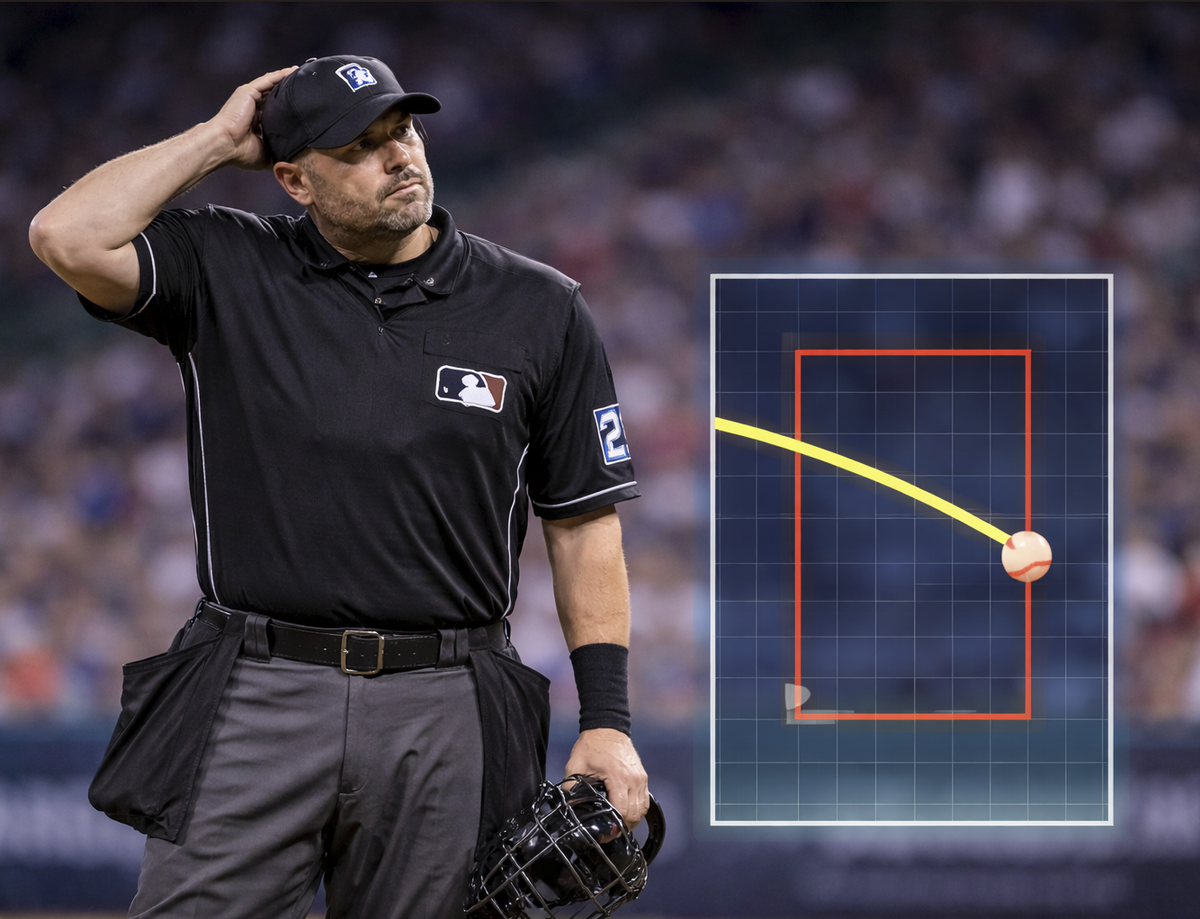
Major League Baseball has officially rolled out its Automated Ball-Strike (ABS) challenge system, allowing technology to review an umpire’s call on balls and strikes.
And almost immediately, something interesting happened.
During Spring Training games, teams have been challenging several calls per game, and roughly half of those challenges are being overturned. In one game, an umpire even had five straight calls reversed.
These aren’t replacement officials learning the job.
These are Major League umpires; professionals who have spent years mastering one of the hardest judgment calls in sports.
Yet even they are having calls corrected once technology reviews the moment.
That shouldn’t be shocking.
If anything, it should sound familiar.
Decisions Happen Fast
A 95-mile-per-hour fastball reaches home plate in about 400 milliseconds.
Less than half a second.
That’s all the time an umpire has to track the pitch, judge its location, and make a decision — from one angle, in real time, with no replay.
Only later does technology show exactly where the ball crossed the plate.
And once that graphic appears on screen, the answer suddenly looks obvious.
ABS doesn’t always create empathy for umpires. Often, it creates certainty from people viewing the moment with advantages the umpire never had.
That distinction matters.
Police Officers Live There Every Day
Police officers make decisions the same way; in real time, from a single perspective, with incomplete information.
They’re interpreting behavior, movement, compliance, tone, environment, and potential threat simultaneously. Situations evolve quickly, and hesitation isn’t always an option.
Later, those decisions are reviewed using body cameras, surveillance footage, cellphone video, slow-motion footage, and multiple angles.
In many ways, that review process functions a lot like ABS.
The difference is simple.
In baseball, the challenge happens before the next pitch. In policing, it happens after everything is already over.
What ABS Is Really Showing Us
Major League Baseball didn’t implement ABS because umpires suddenly forgot how to do their jobs. Professional umpires remain incredibly accurate.
The system exists because even elite professionals can’t be perfect when decisions must be made in milliseconds.
Technology helps refine outcomes.
It improves consistency.
It increases confidence in review.
But it also does something else, whether intended or not.
It shows how different a moment looks when you slow it down and analyze it later.
And that’s where the parallel to policing becomes hard to ignore.
Once technology reconstructs a pitch, viewers see precision the umpire never had. The strike zone is fixed. The ball’s path is tracked. The answer feels undeniable.
Police encounters are often viewed the same way.
Video allows us to pause, rewind, and analyze decisions made in seconds, often revealing options that only become visible after the moment has passed.
Replay doesn’t just review a decision. It changes how confident we feel judging it.
Real-time judgment is difficult, even for highly trained professionals working in controlled environments.
Policing happens in environments that are anything but controlled.
Technology absolutely has a role. Transparency matters. Accountability matters.
But technology doesn’t replace human judgment.
It simply reveals how hard that judgment really is.
Final Thought
Baseball still needs umpires.
Not because technology isn’t useful, but because someone still has to make the call in real time.
Police officers operate under that same reality every day.
Replay may bring clarity later, but decisions are still made live, without perfect information and without the benefit of hindsight.
And maybe that’s the real lesson ABS is showing us... the moment always looks different once the game slows down.